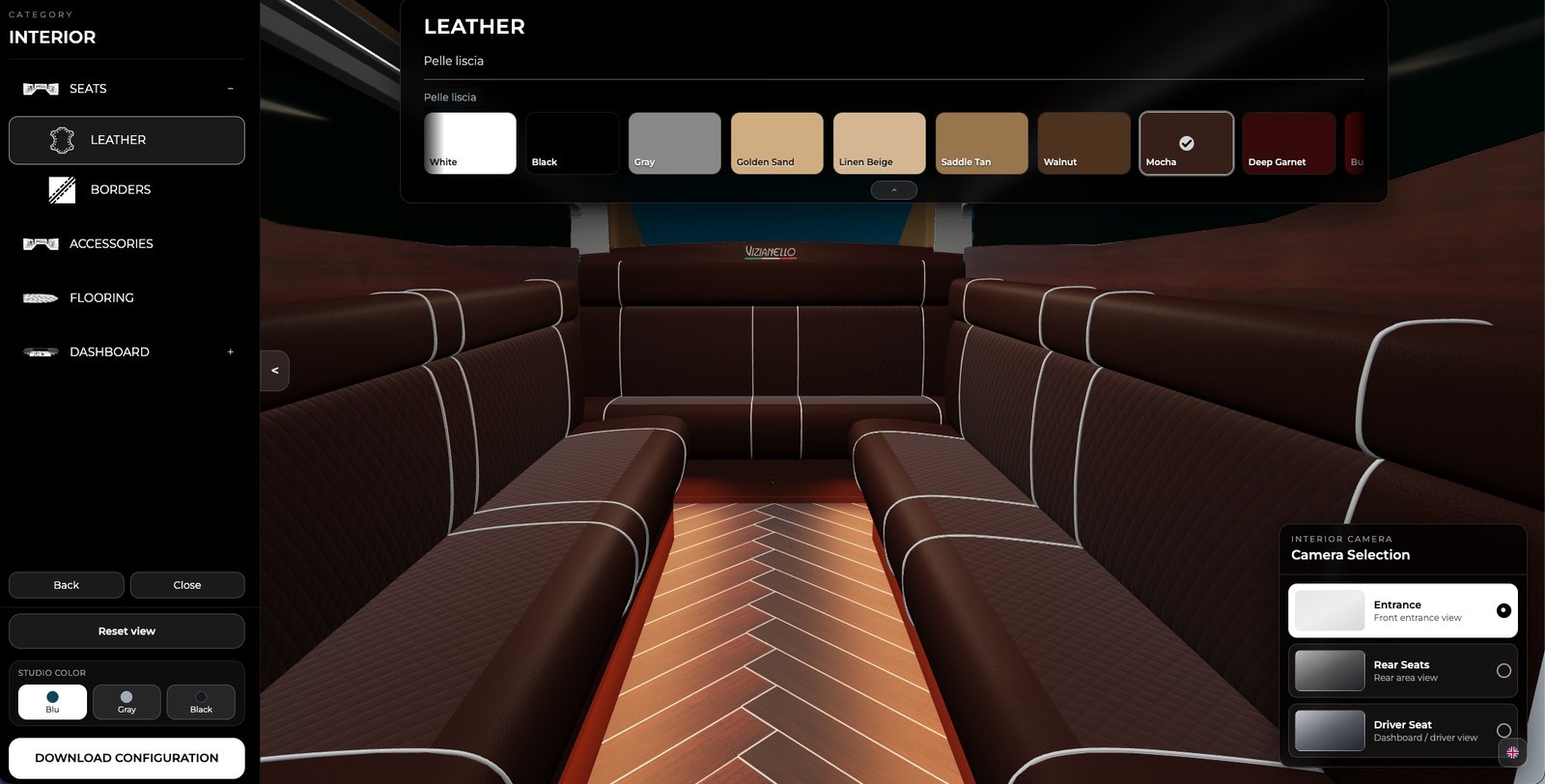
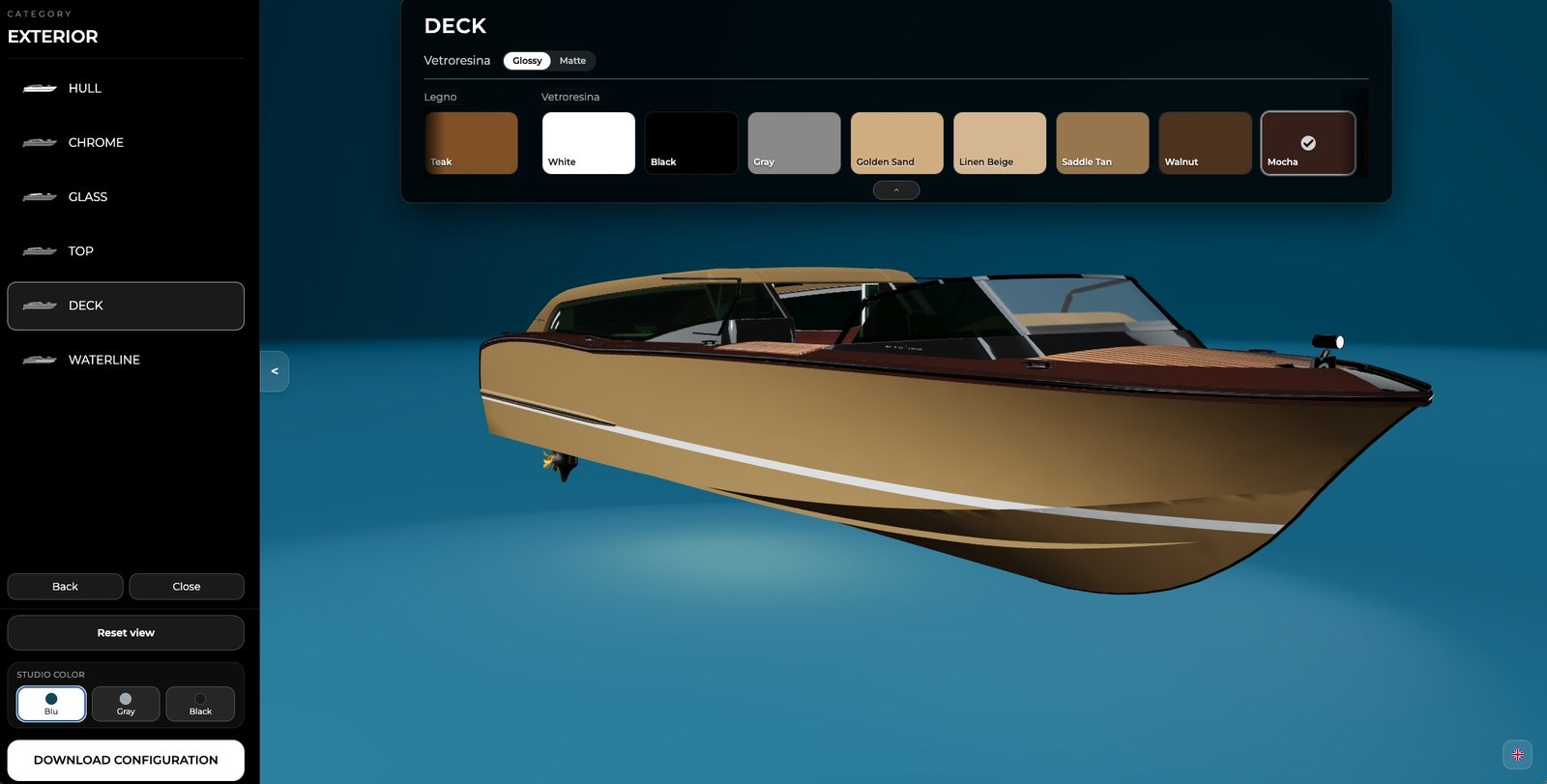
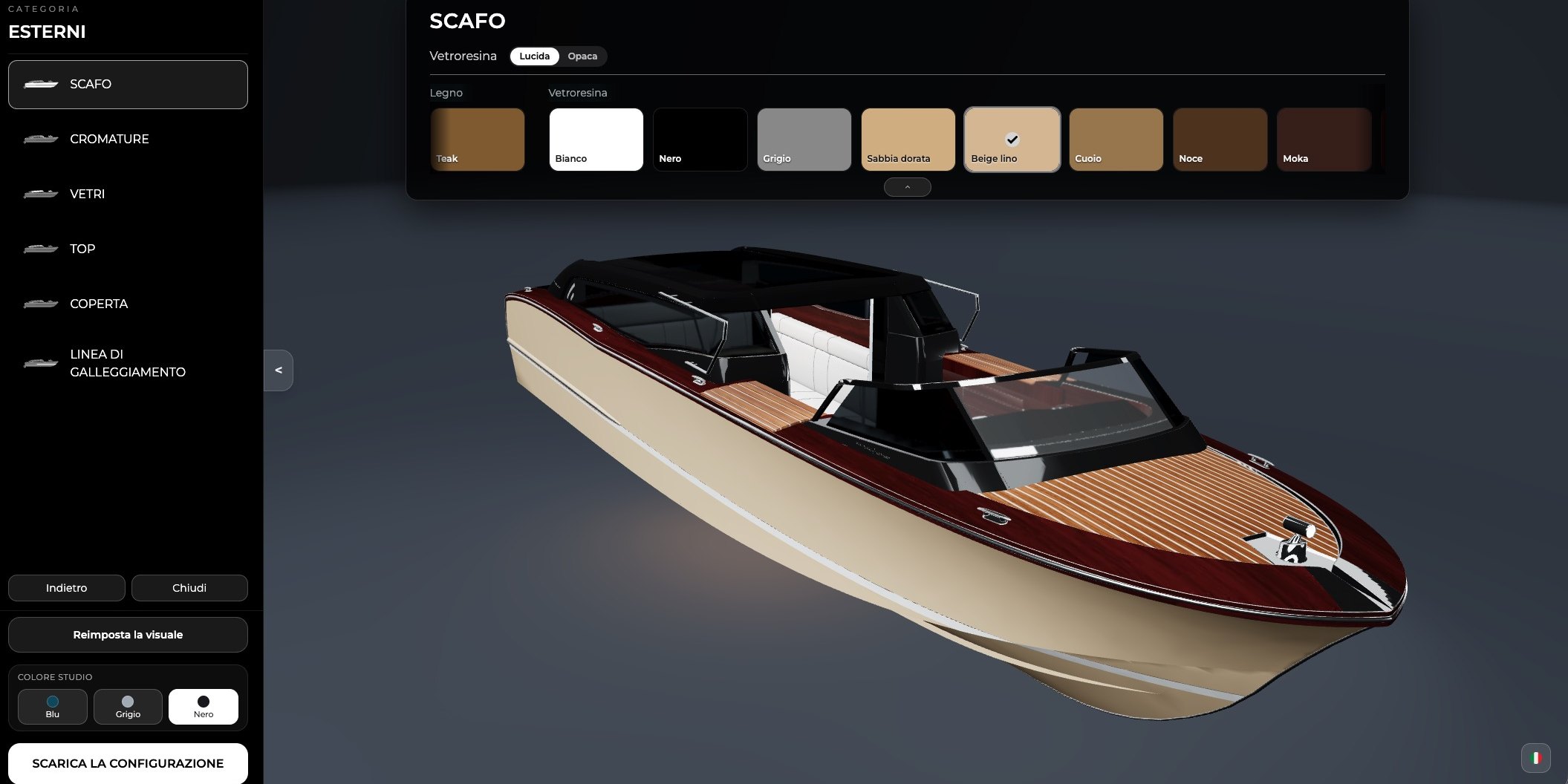
Four stages, four different crafts, all working on the same vessel.
01Work on the 3D model
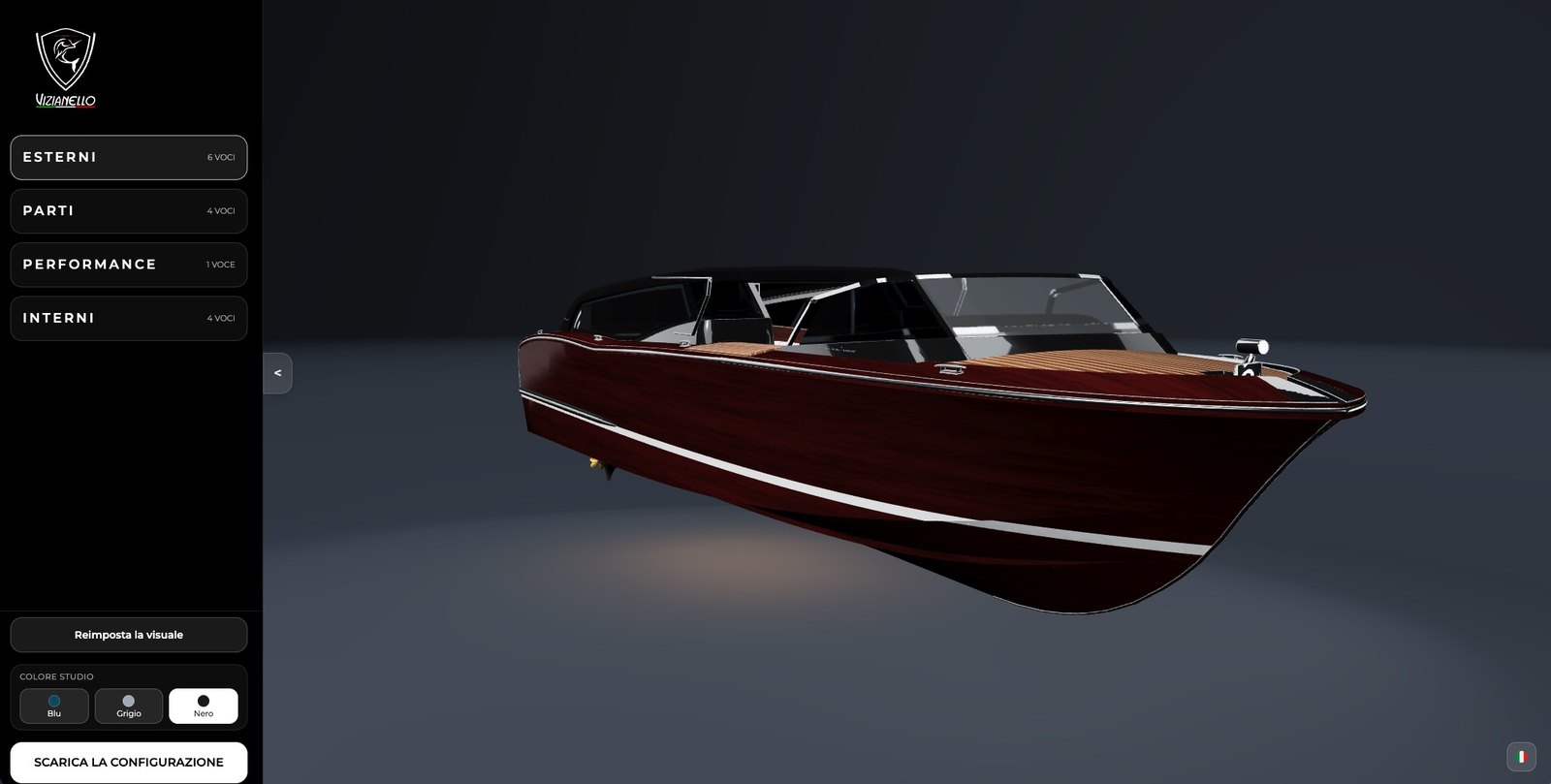
Geometry reorganised and split into configurable parts — hull, deck, upholstery, dashboard, air intakes, bow, stern, logos — with careful UV mapping and meshopt geometry compression: a model of over four million vertices that arrives intact inside a browser.
02Creating and preparing the textures
167 texture files organised by material group: wood essences (teak, mahogany, walnut), leathers and hides, carpet and technical fabrics, forged carbon, chrome, glass. Every material is built in PBR maps and lit by environment lighting, so that wood still looks like wood under a different light.
03The application, in two languages
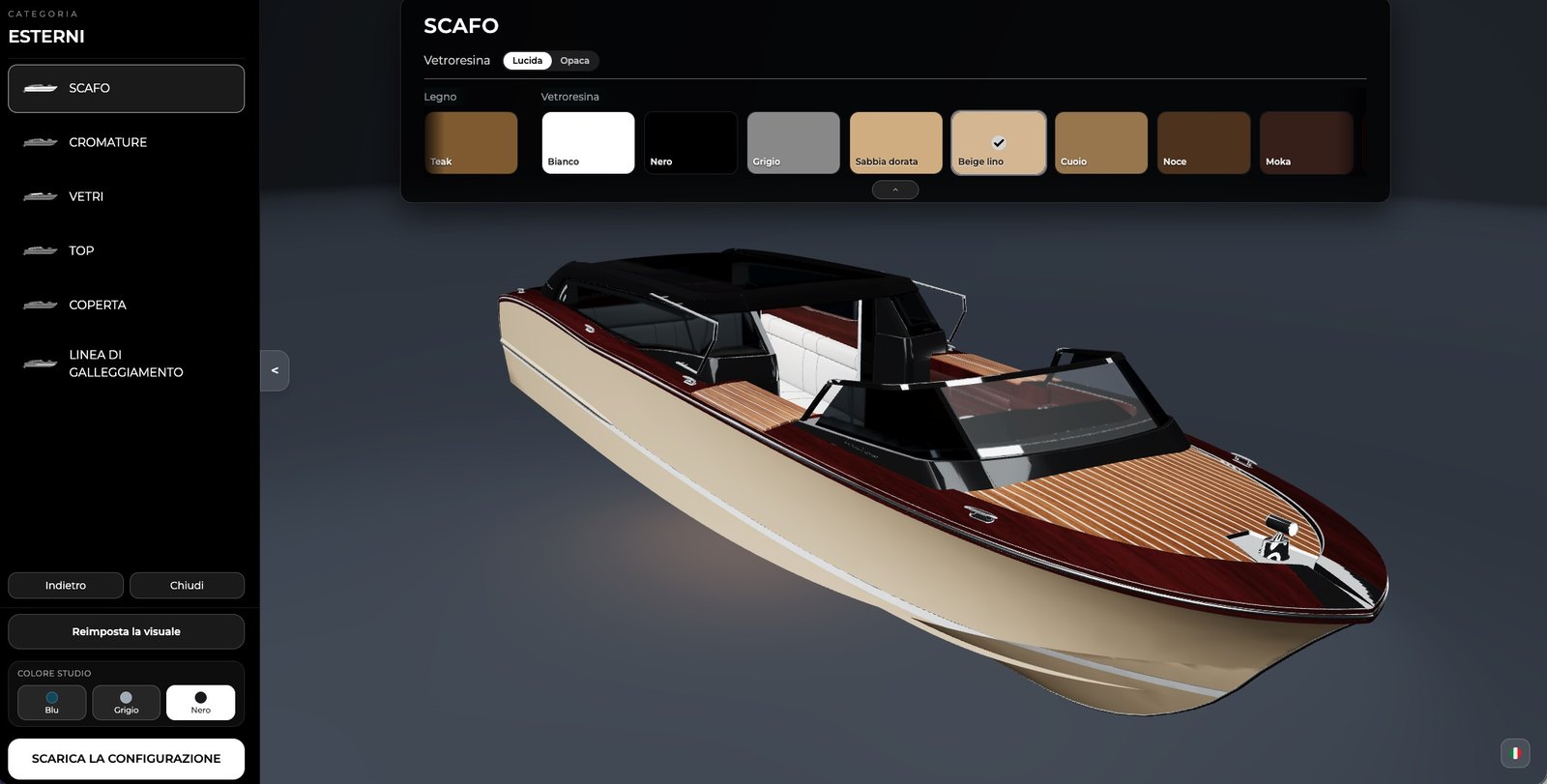
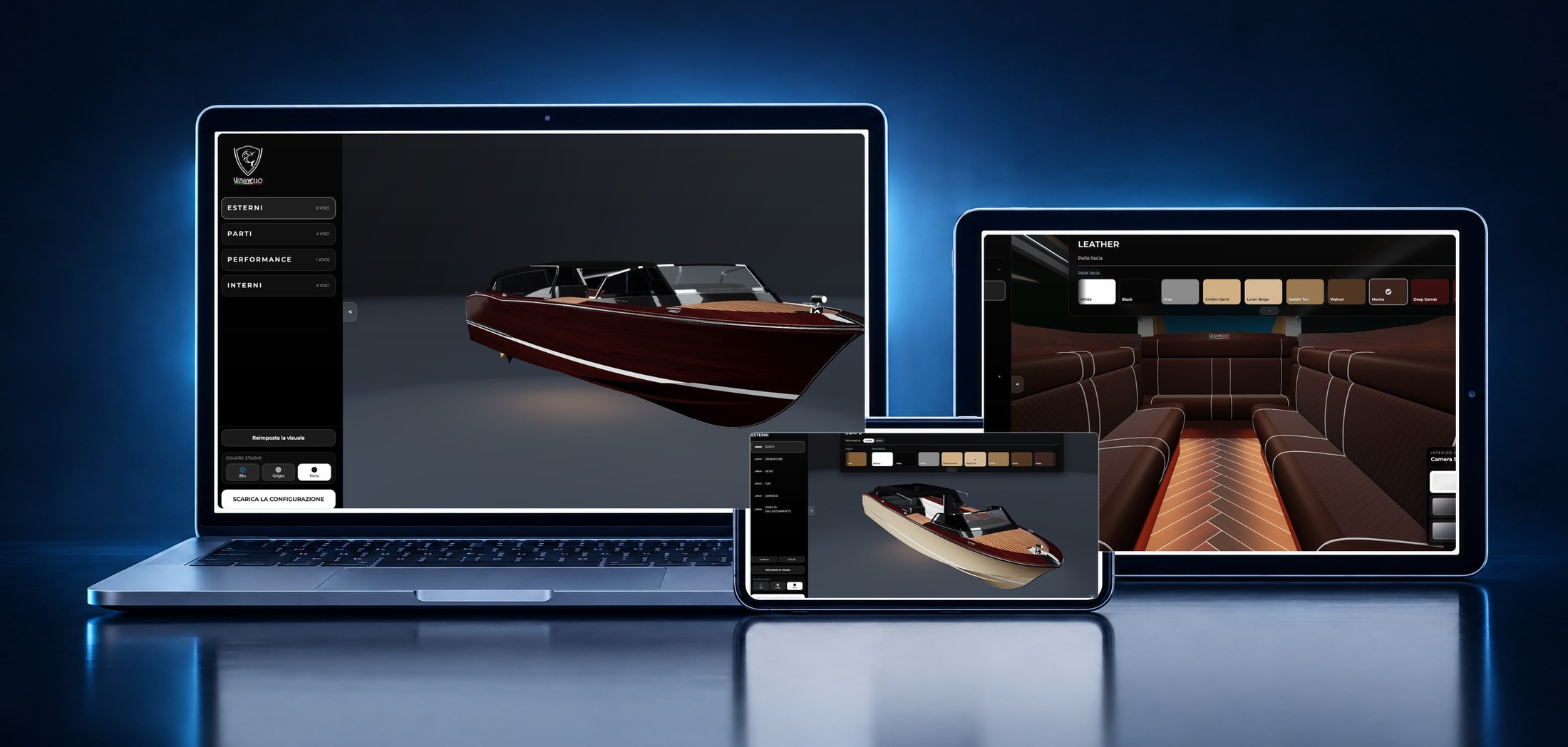
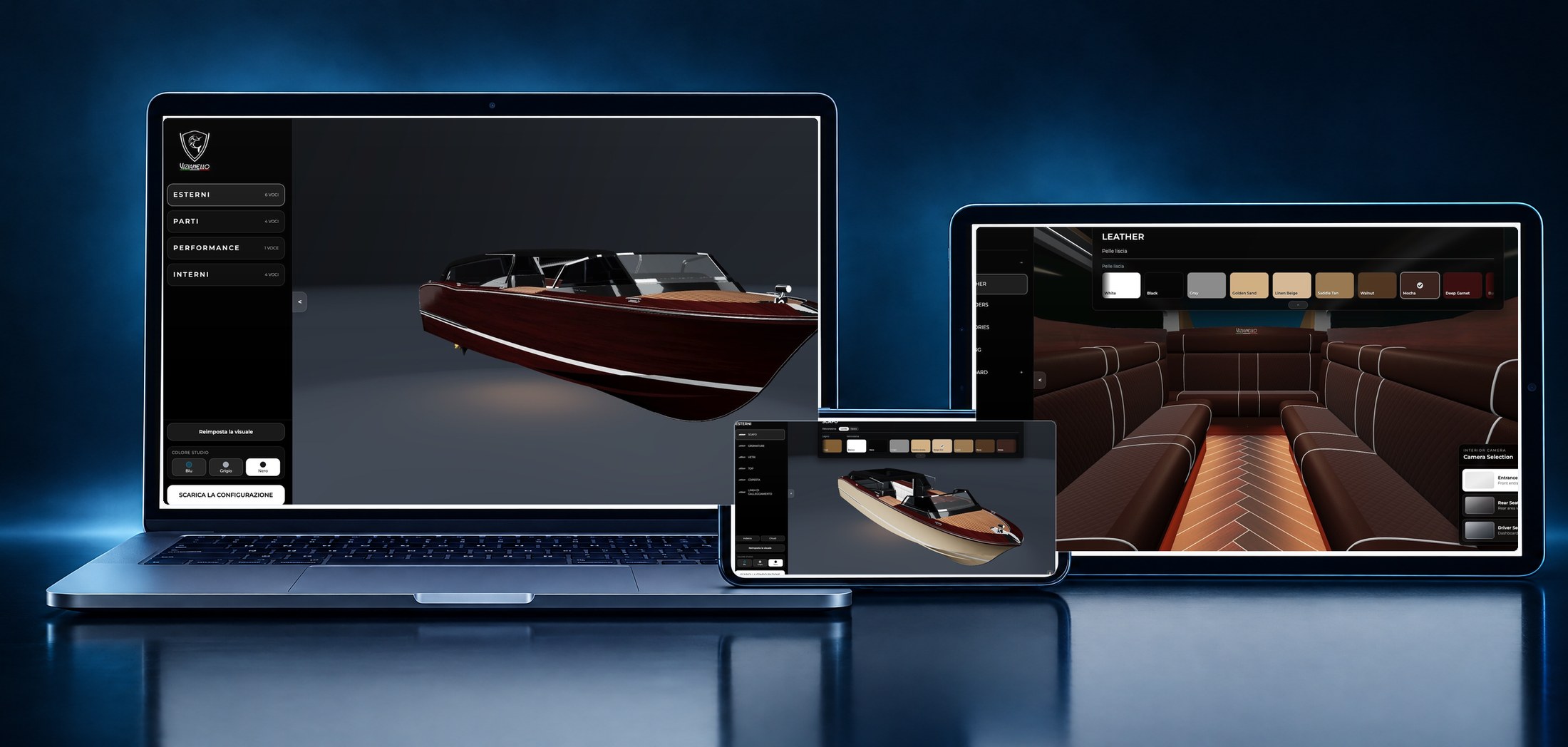
A React and three.js application running on WebGL, with a native Italian and English interface — not a translation added afterwards. Four sections (Exterior, Parts, Performance, Interior), 25 customisation categories and 76 colours and materials, with their real names.
04Performance
Progressive loading, asynchronous compilation of the graphics programs so the browser never freezes, quality scaled to the device's GPU — integrated laptop graphics included — and automatic recovery if the graphics context is lost. Engineering the user never sees: they only notice that it works.