Four areas of work to guide visitors, explain the exhibits and break down cognitive and architectural barriers.
01VR headsets and Marzocchi’s photographs
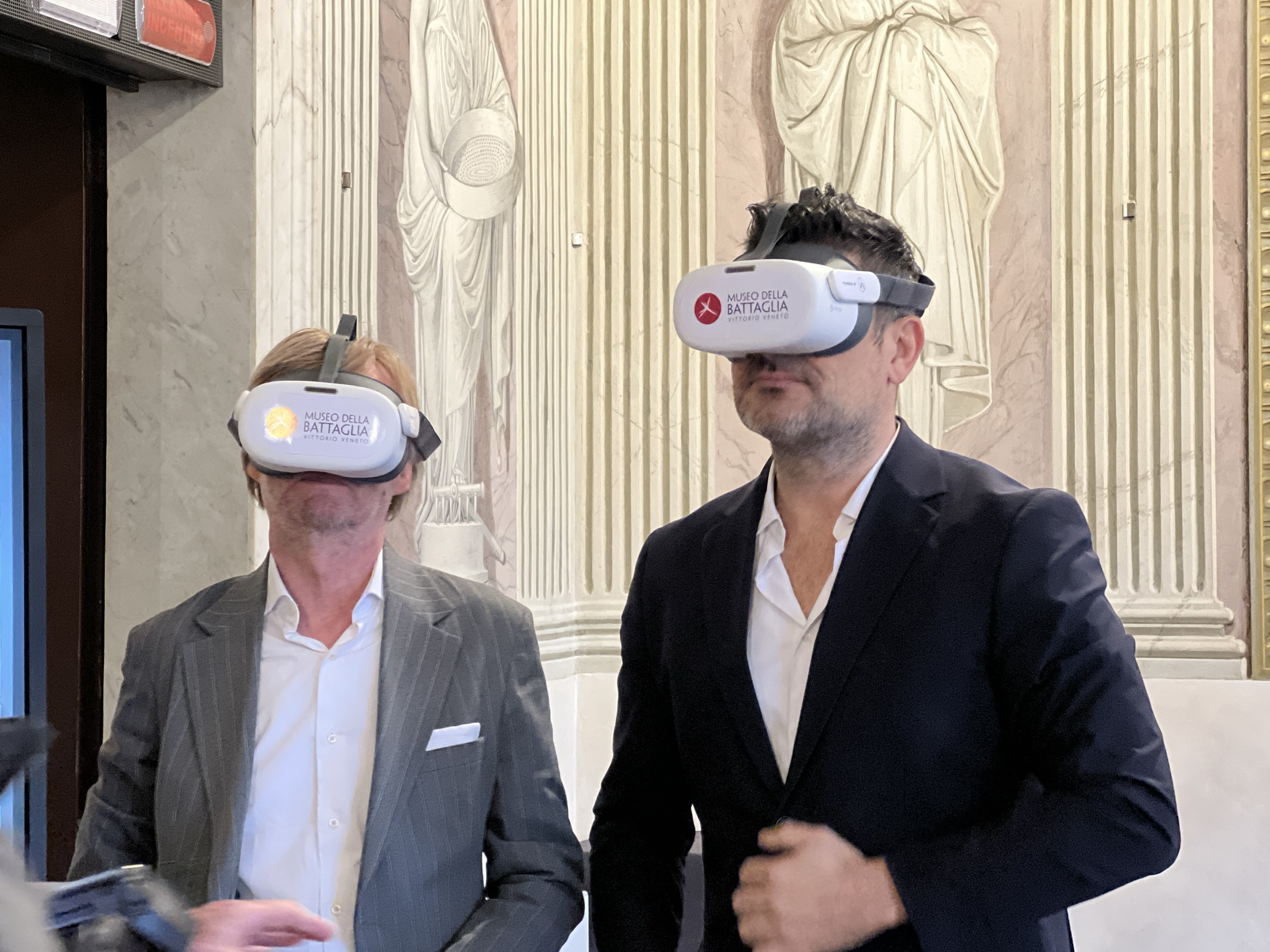
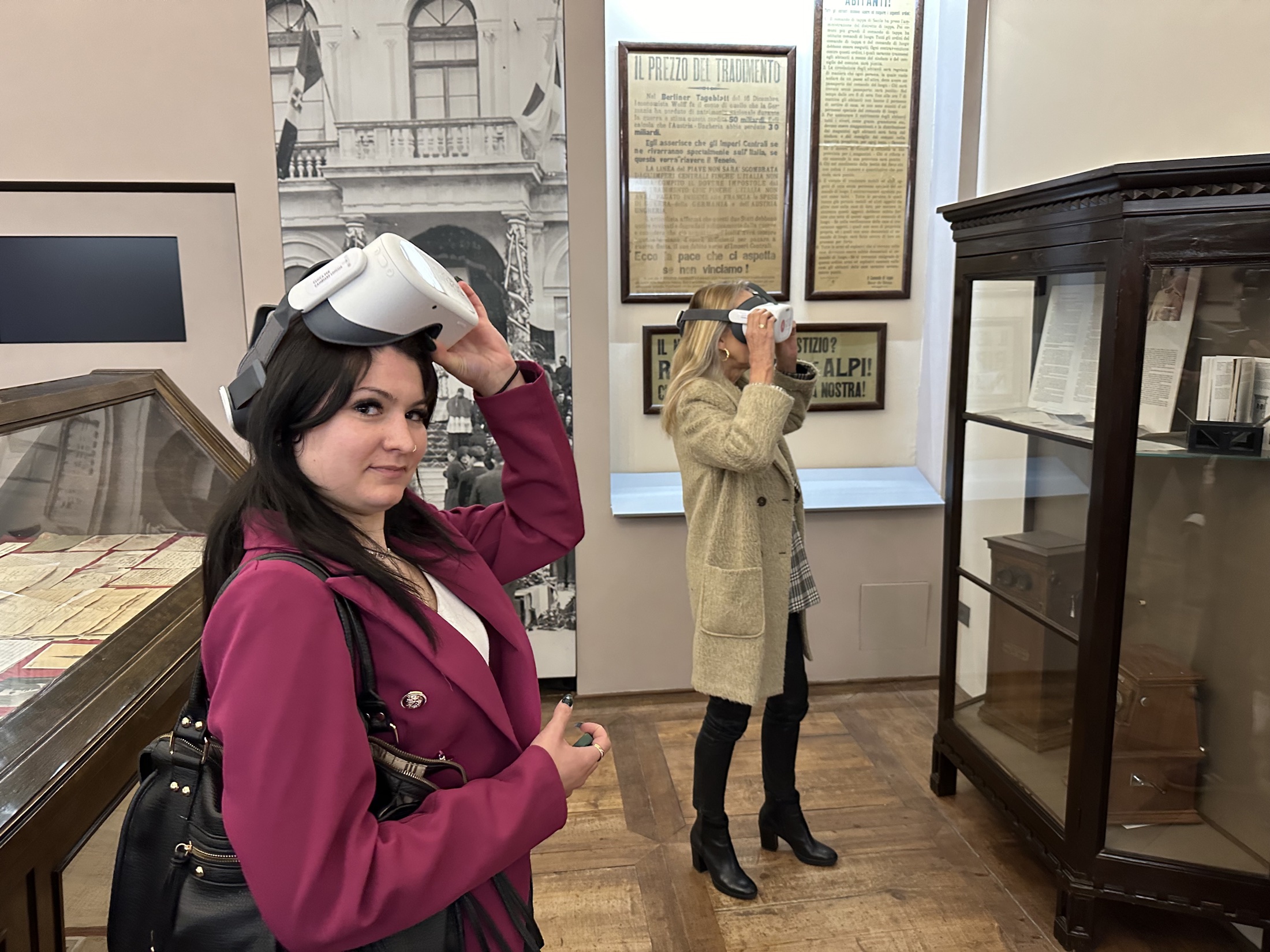
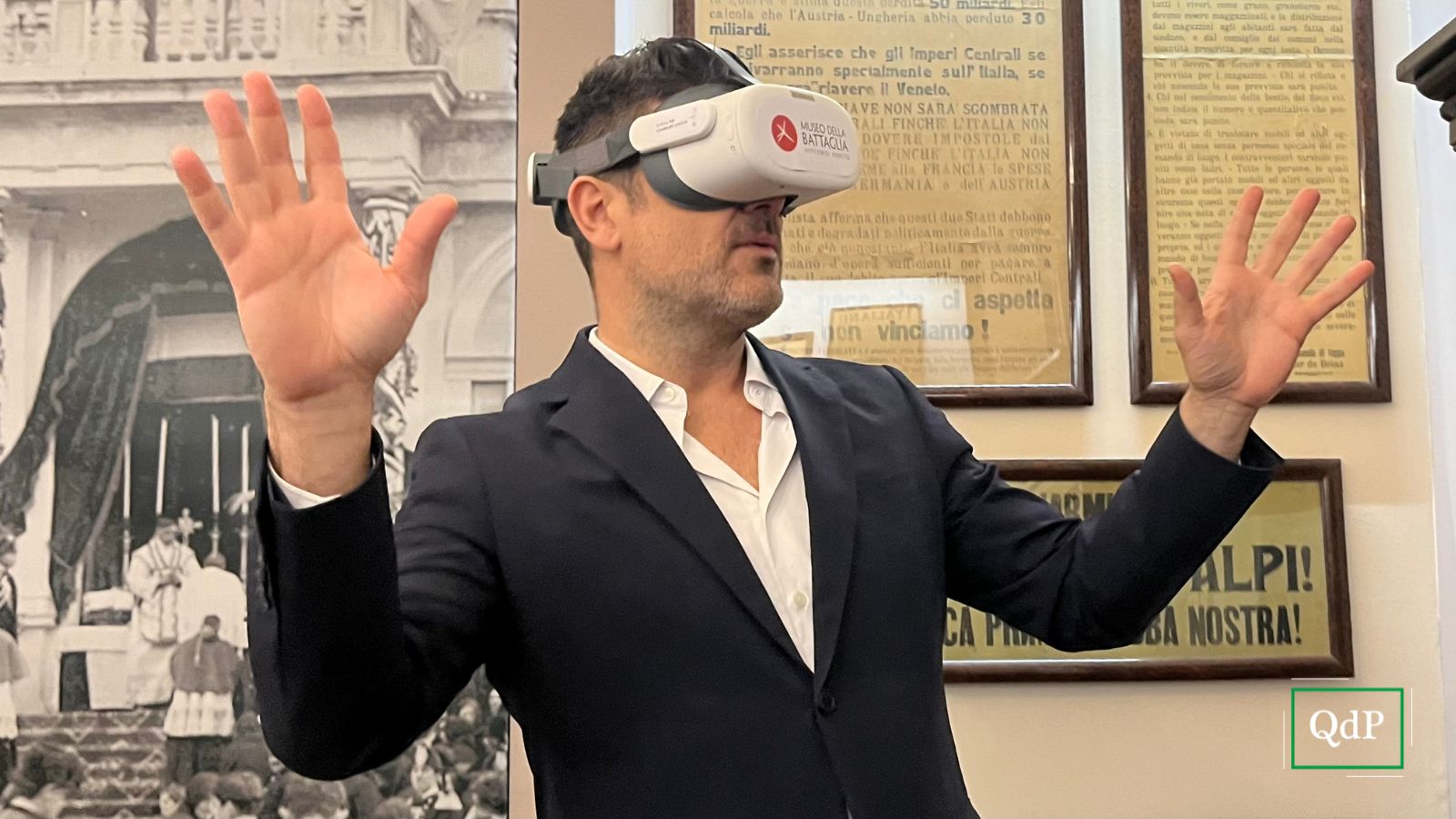
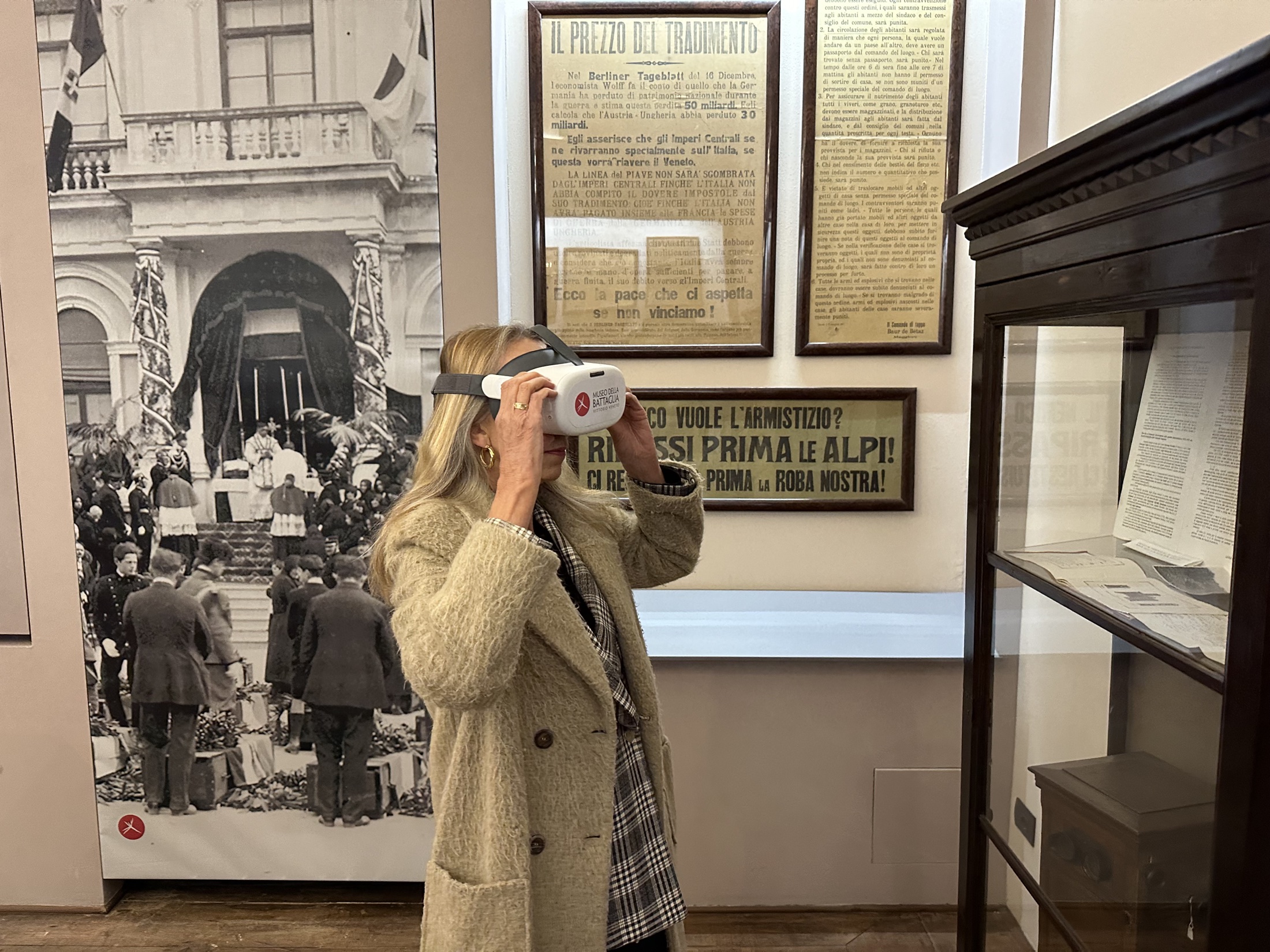
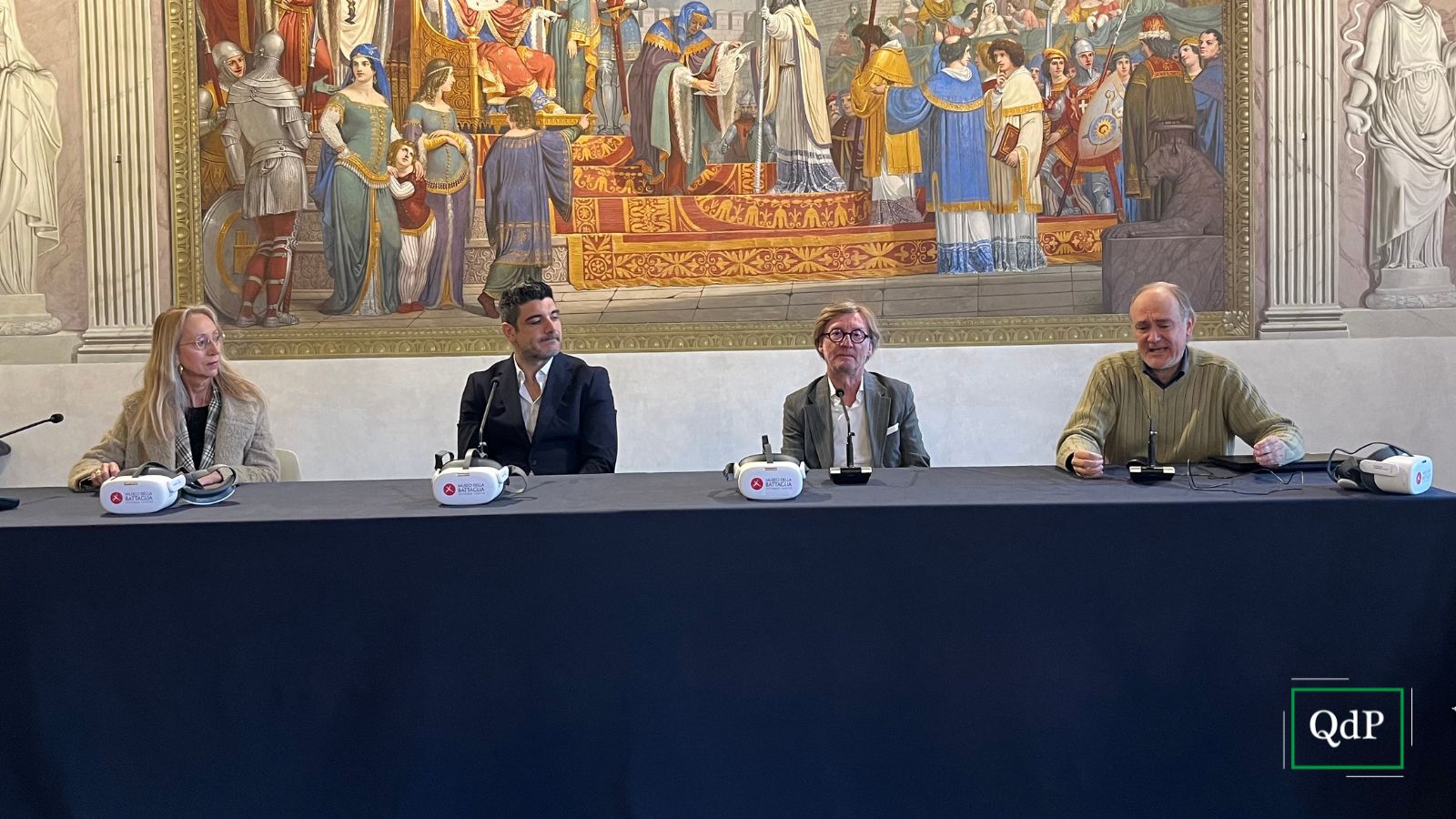
On the ground floor, twenty VR stations let visitors view around 100 stereoscopic photographs by Marzocchi, recovered and reassembled into a 3D experience. On the top floor, images and a voice-over tell the story of the Battle of Vittorio Veneto.
02Multilingual touchscreens
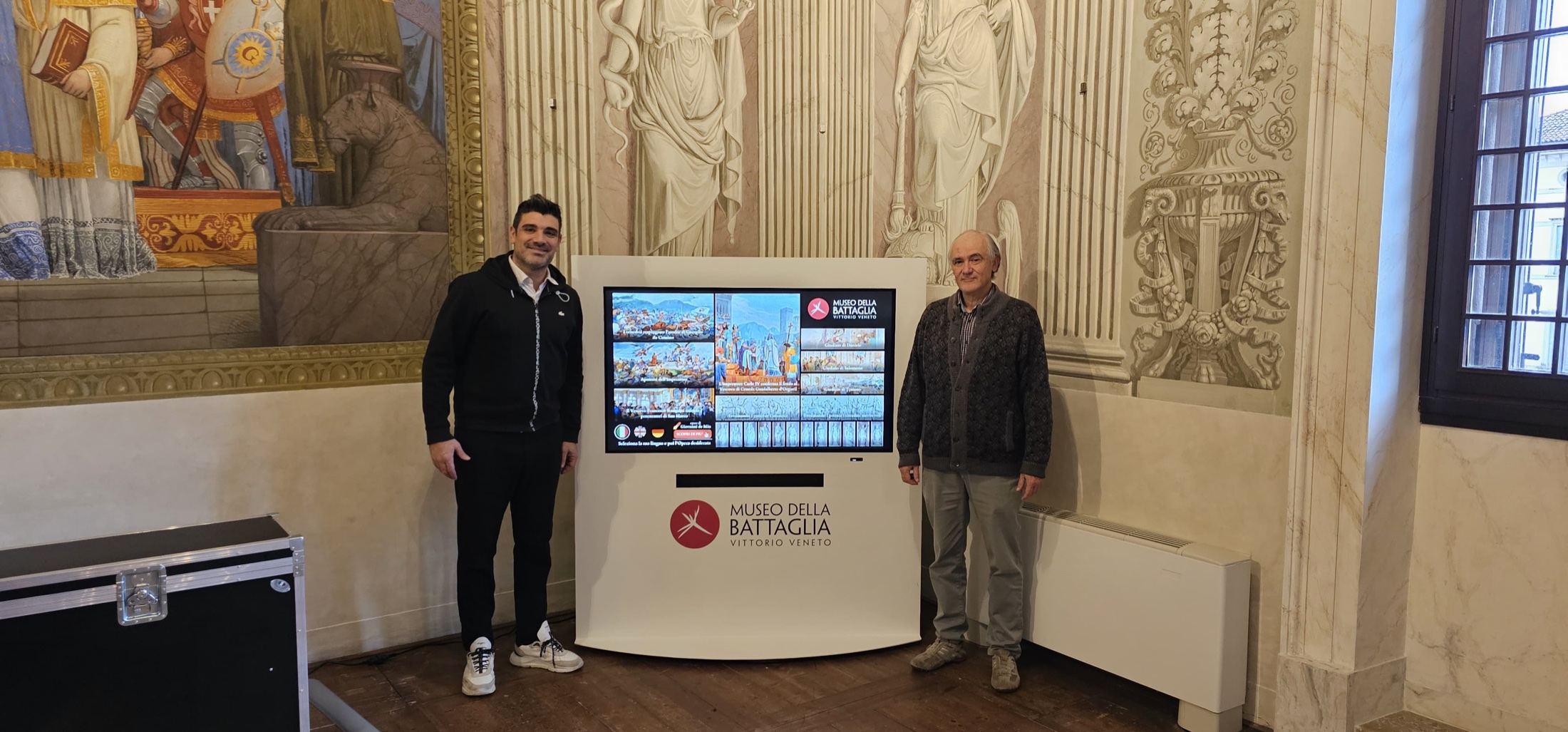
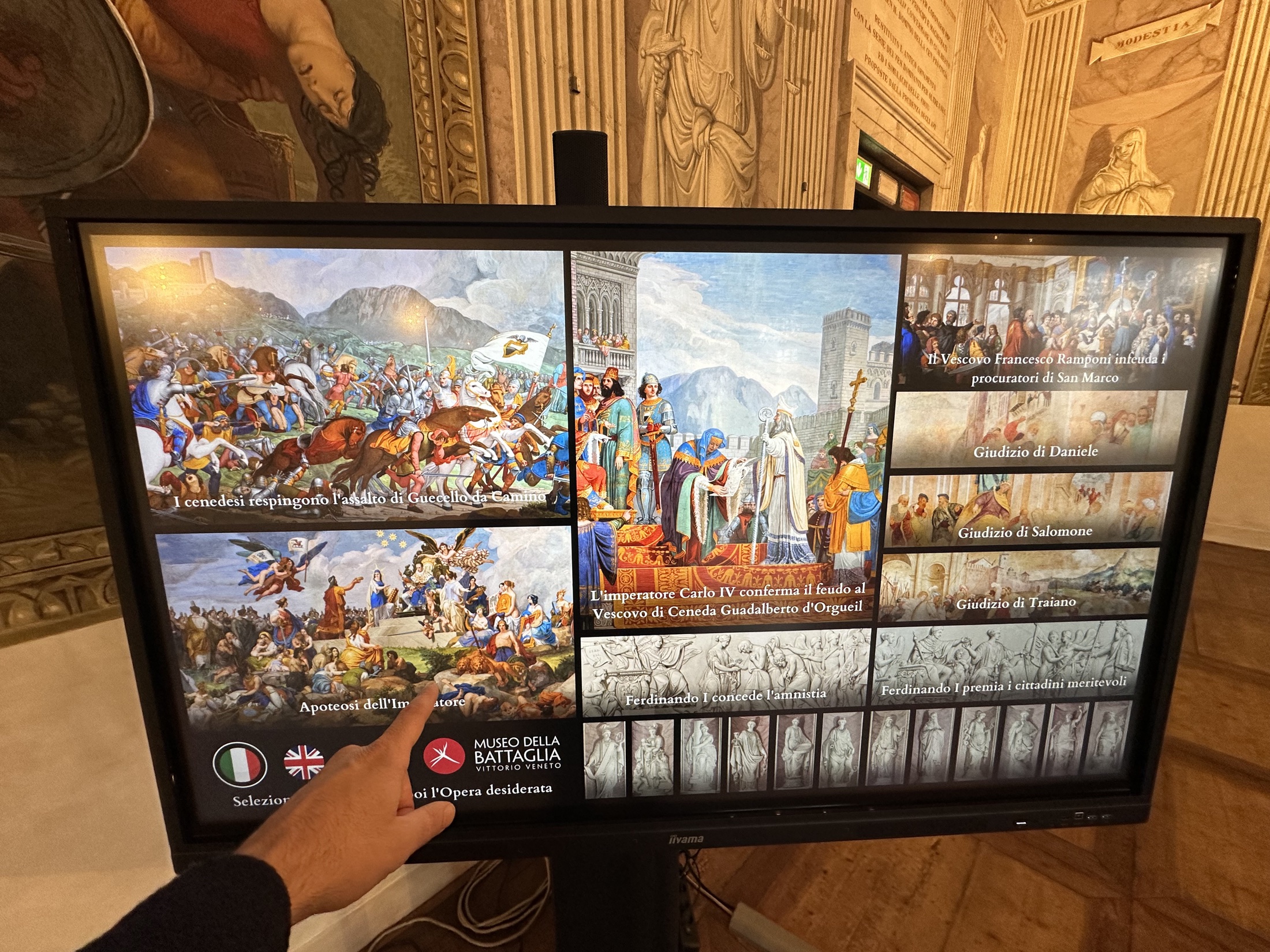
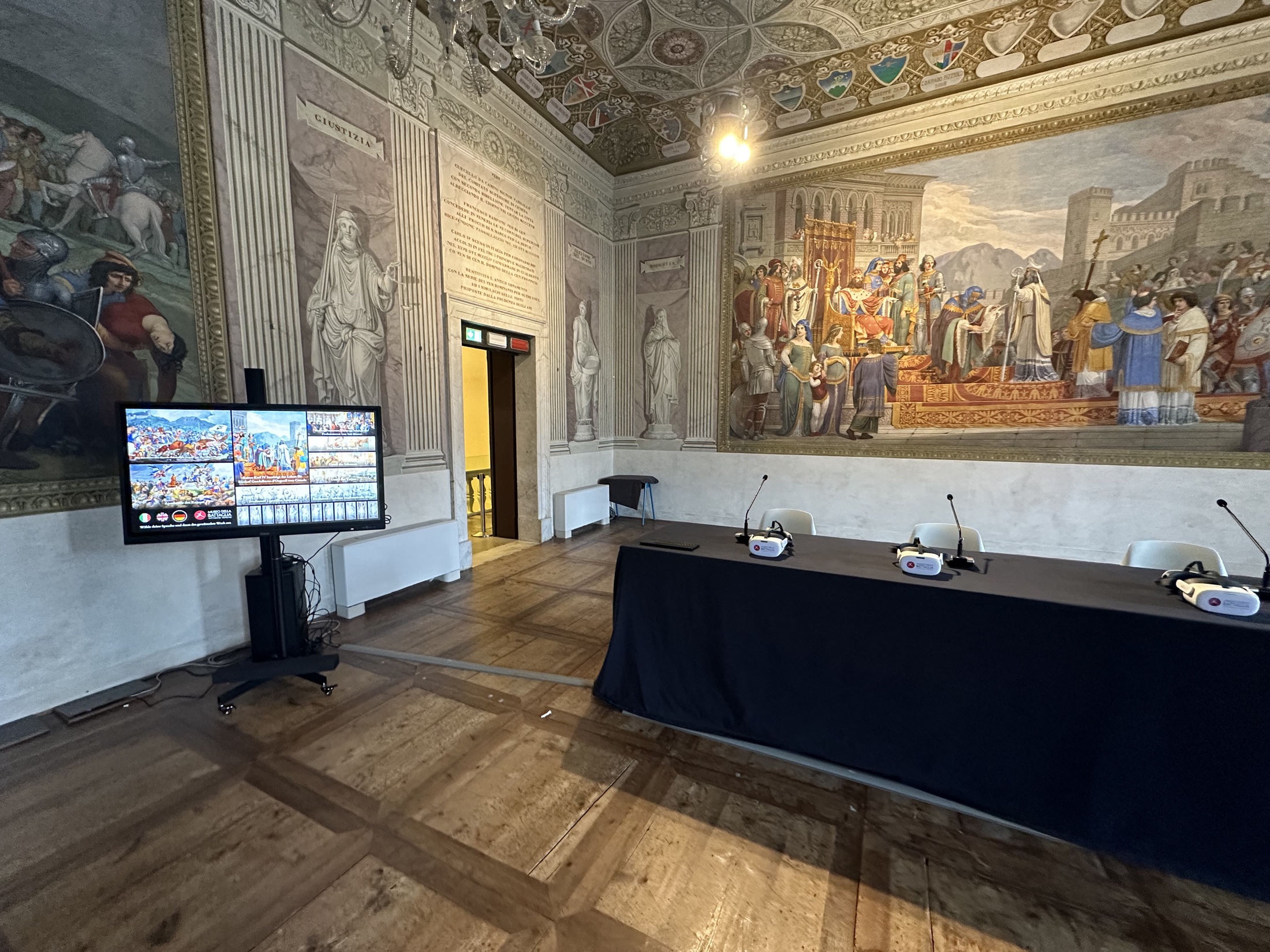
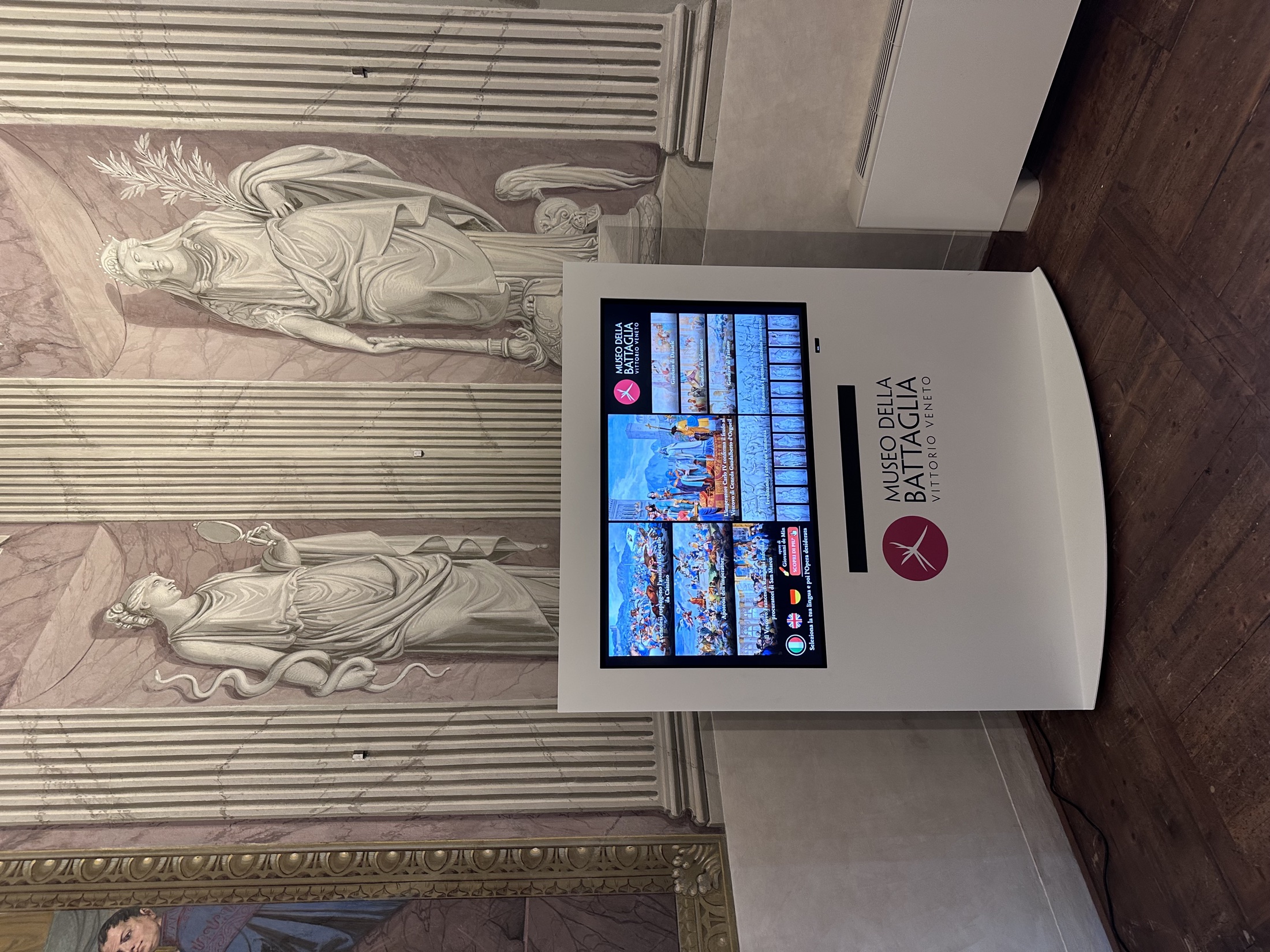
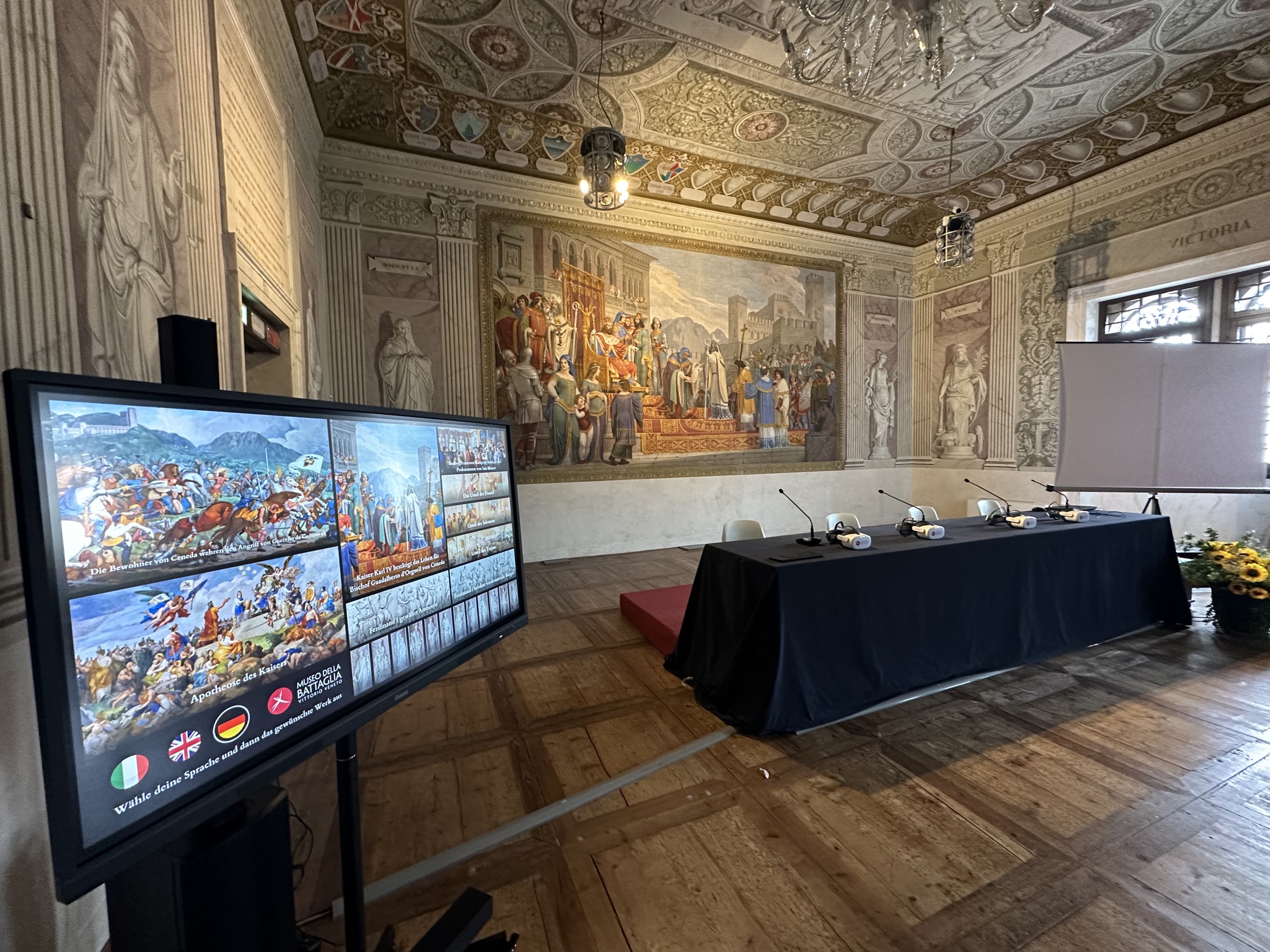
Touchscreen monitors that help communicate in several languages (Italian, English, German) and overcome architectural barriers, giving easy access to the content. They sit at a height that is accessible to wheelchair users too, so everyone can interact independently.
03Armeria Marson and the exhibits
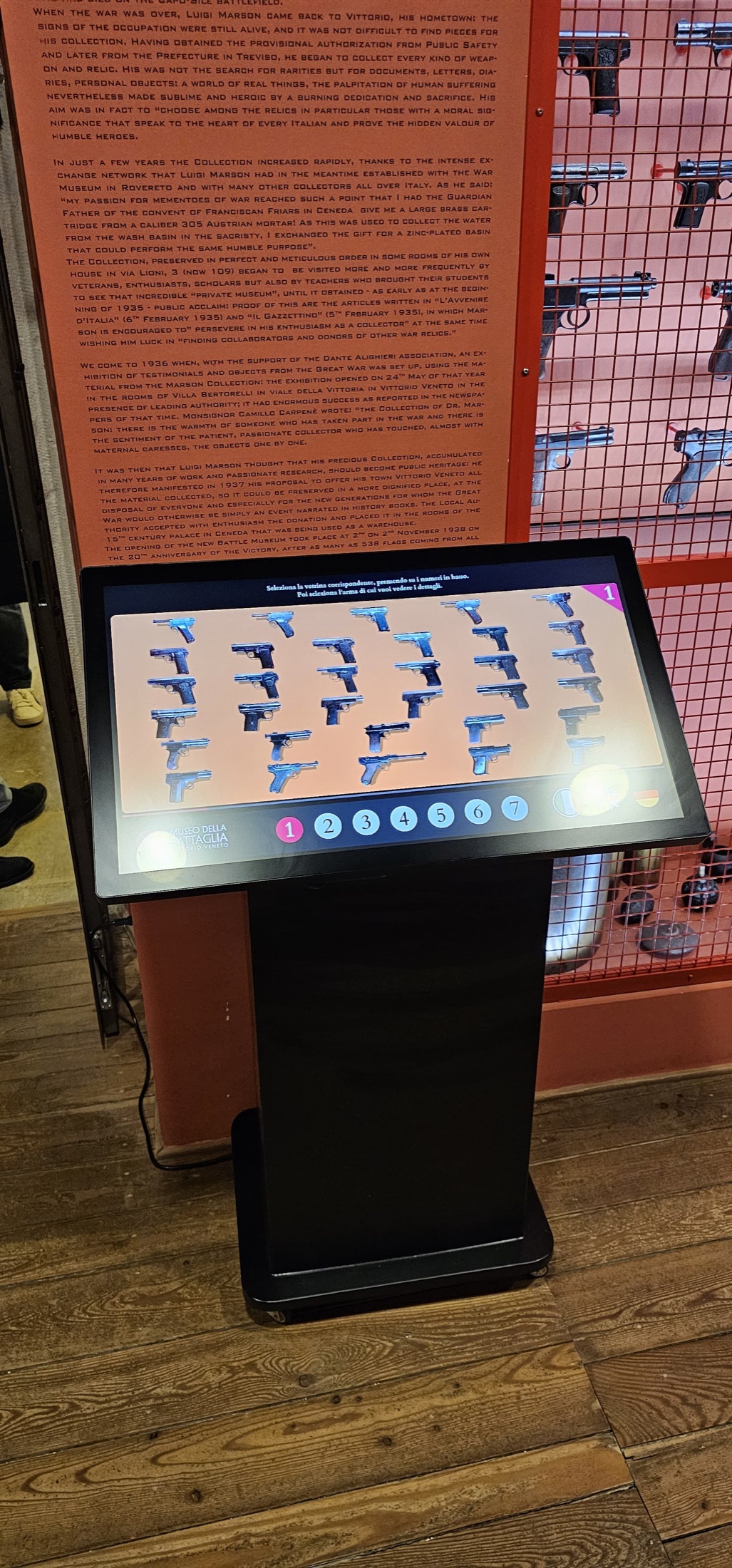
In the Armeria Marson the whole collection is described on a touchscreen with short videos, images, audio and subtitles. The weapons store, previously closed to visitors, also opens to the public with a new display and a small conservation workshop.
04Accessibility and inclusive routes
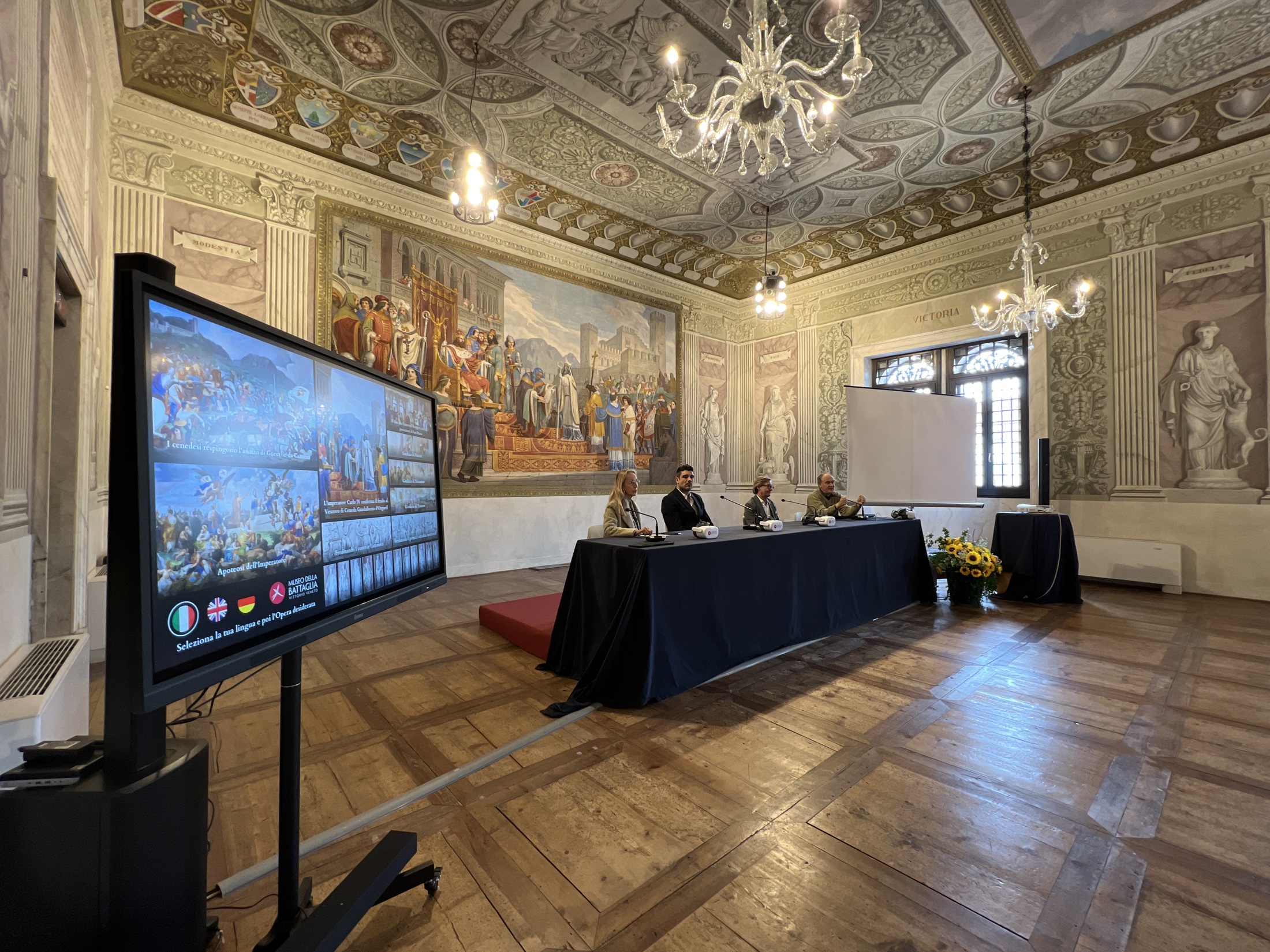
A braille route and downloadable audio guides, inert materials for the tactile experience of blind visitors, new lighting and backlit graphic tablets for effortless reading. In the Aula civica, a large mobile HD laser-light screen stands in front of the central fresco.