
Twenty years of stories, NASA weather data and a quiz with 5,000 questions.
viaggiscoop.it is the Italian travel-diary portal: stories written by travellers, with their own photographs. It is a twenty-year-old system — IIS, ASP.NET, SQL Server, thousands of visits a day — which we rebuilt from scratch without ever switching it off, and to which we added the technology: the weather of the places written about, taken from NASA APIs, the algorithms that read the data and tell you what living in a country is like, an engagement quiz system with 5,000 questions built on more than 246 countries, and an AI assistant inside the editorial desk.
Rebuilt from scratch, without ever switching it off.
This is not a graphics touch-up: the page structure was rethought so the stories and the photographs — the actual content of the portal — read better. And while it was being rebuilt, the site stayed up and open to the people reading it.
A new design
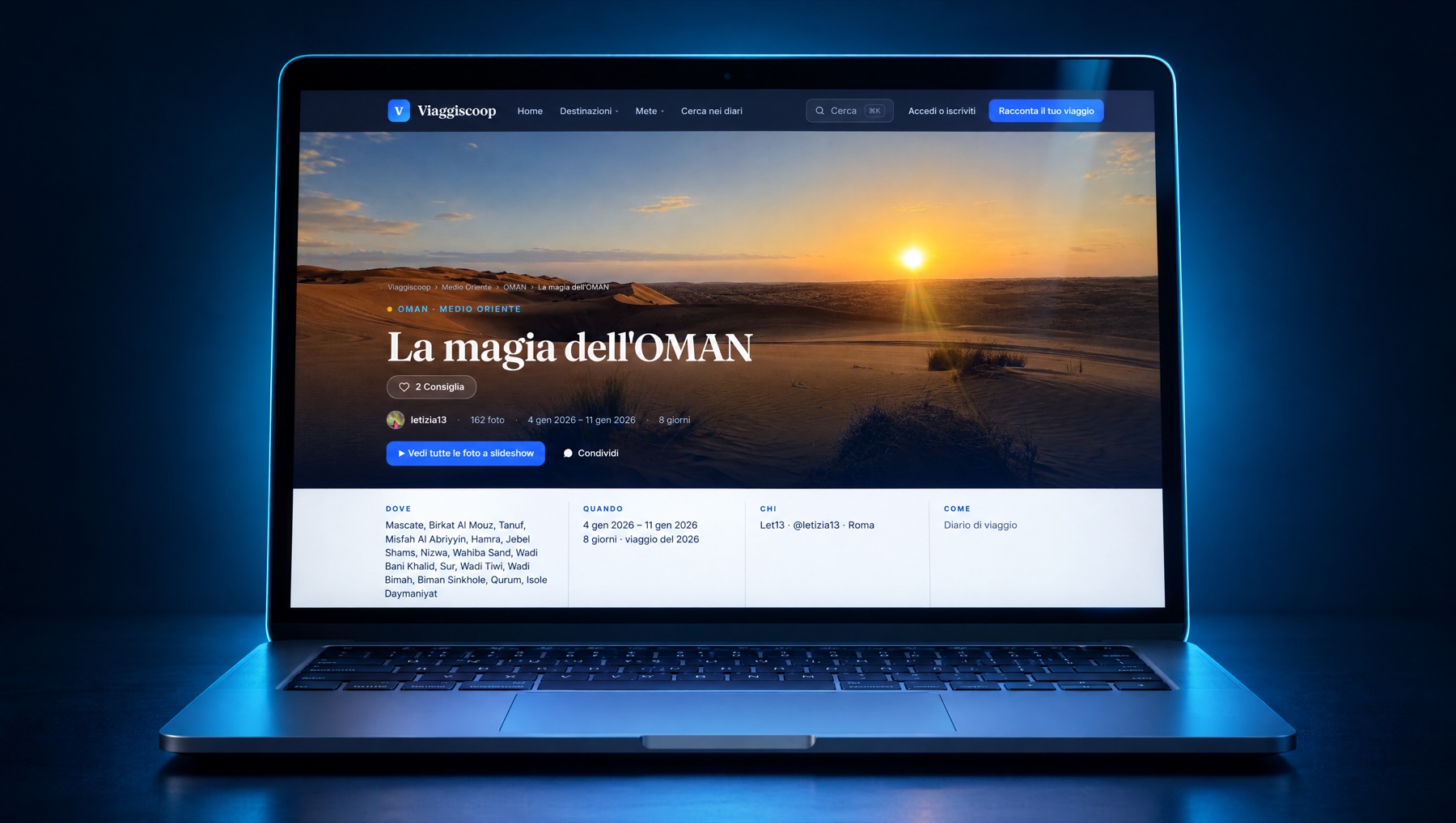
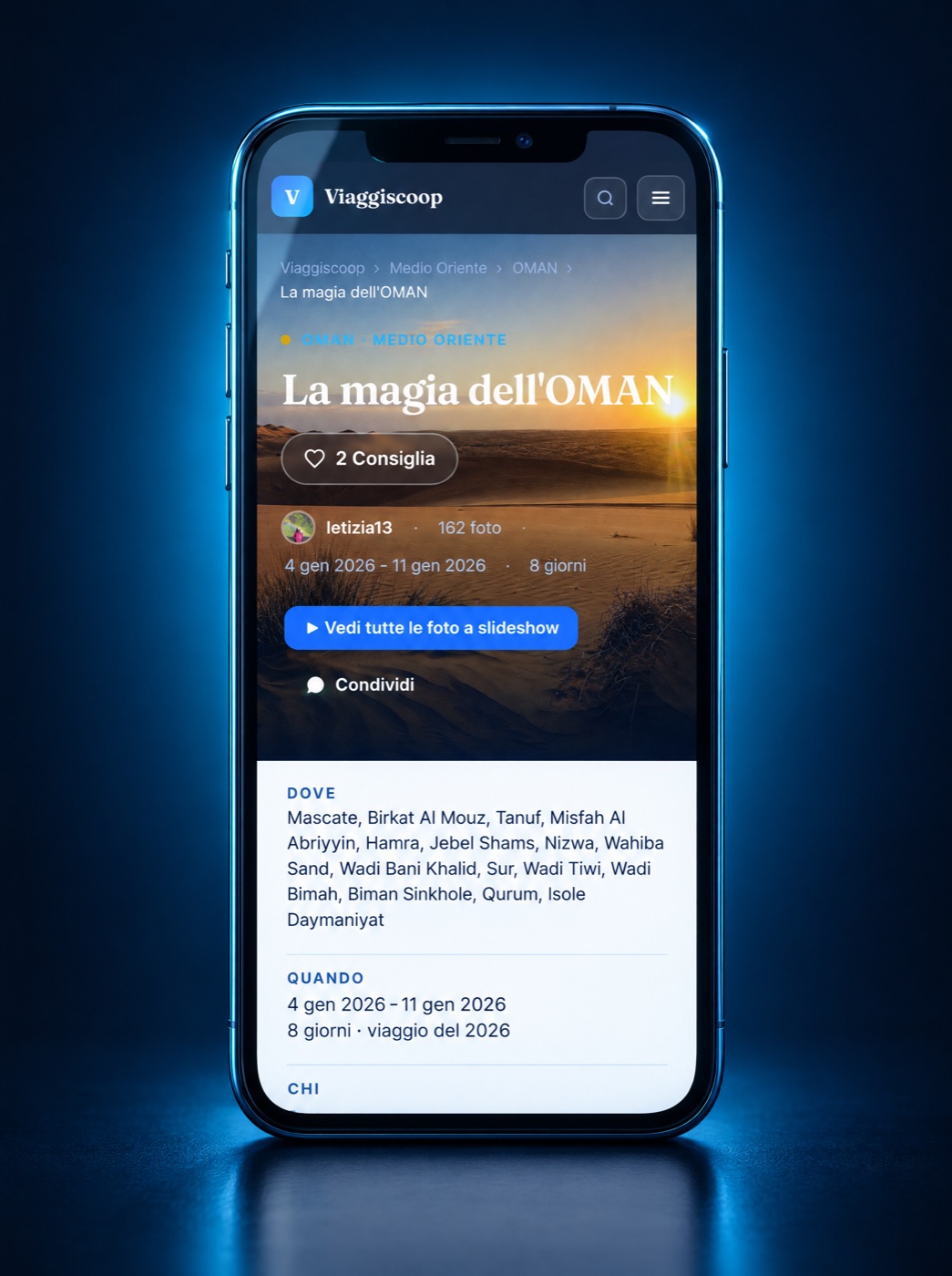
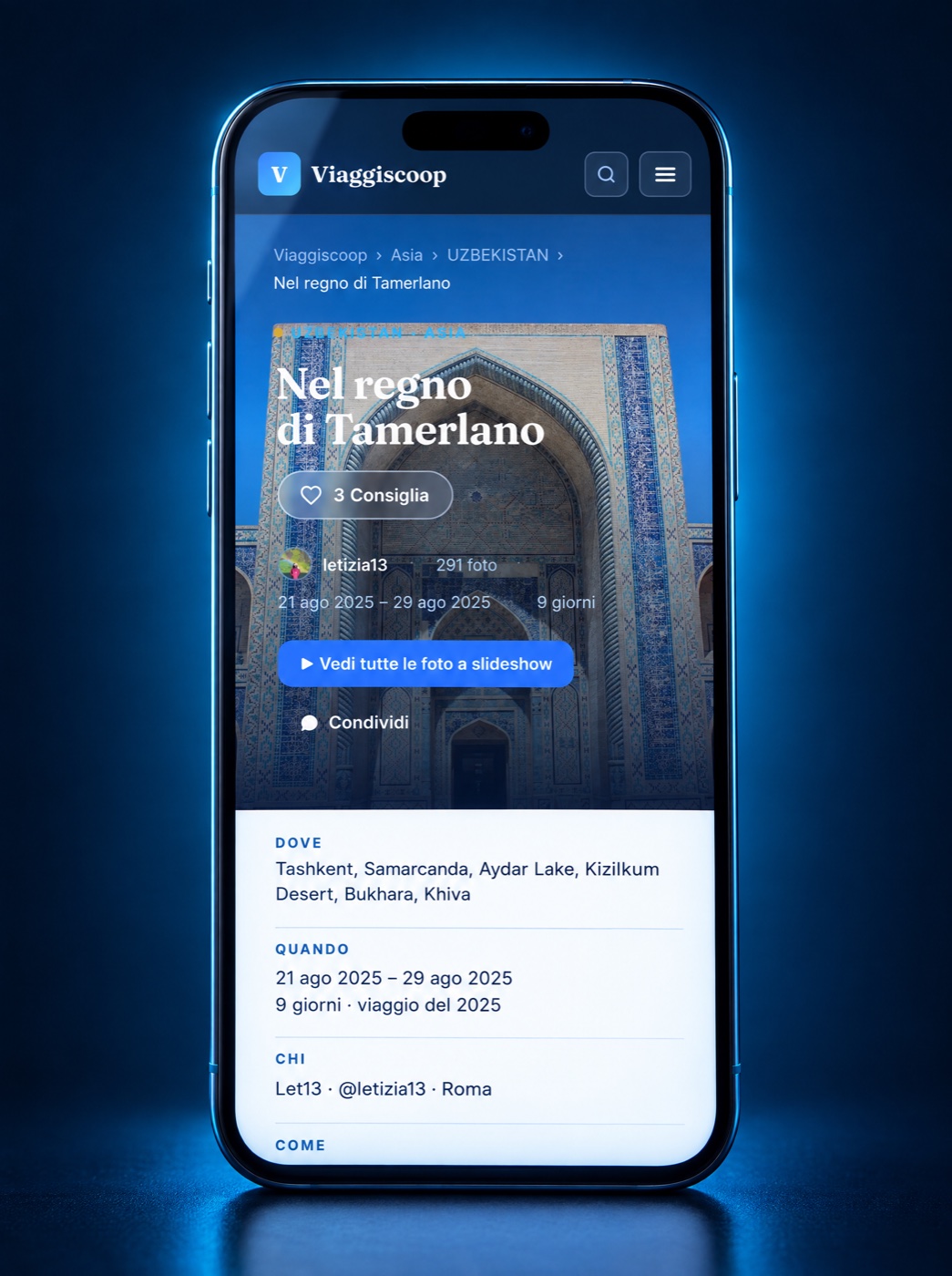
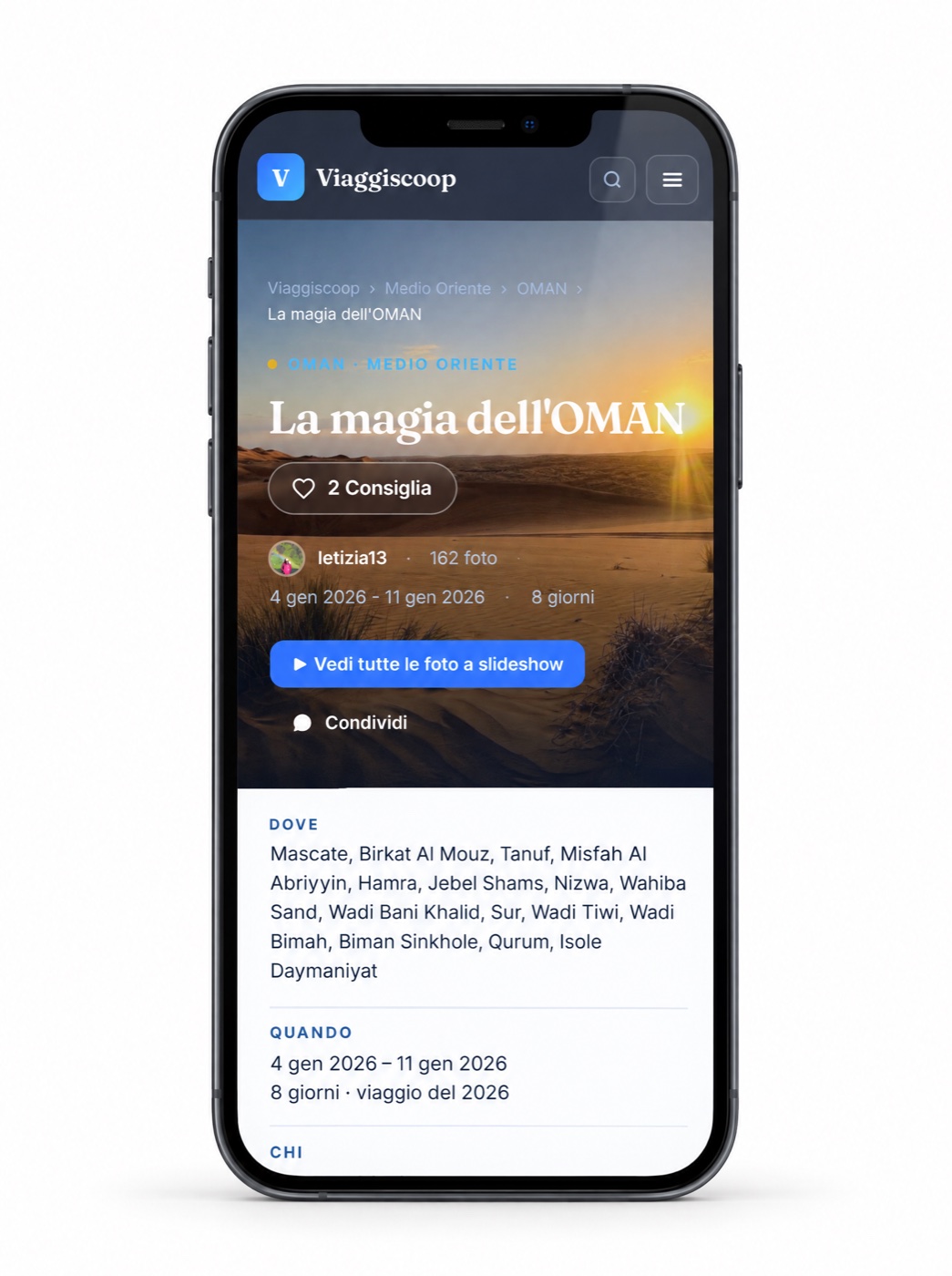
Home, continents, countries, diaries, search, personal area and editorial desk: every part of the portal has a new design, built around how a travel story is read and how its photographs are looked at.
The English portal
Tripscoop.net is the English twin: same design, same URL structure, and the content translated — the stories, the photo captions, the country pages. Two portals, one editorial team.
The editorial chat
The tool the diaries are put together with is new, and there is an assistant inside it: you talk to the AI, fix the story, order the photographs, write the captions and publish.
The numbers of the archive, in plain sight.
These are the portal's own numbers, the ones the site states on its home page: two decades of stories sent in by travellers, with their photographs. All of it is held in an archive ordered by continent, country, year and author — plus the rankings of the most prolific travellers and the most written-about destinations, which update by themselves. The algorithms and the quiz system run on this archive too.
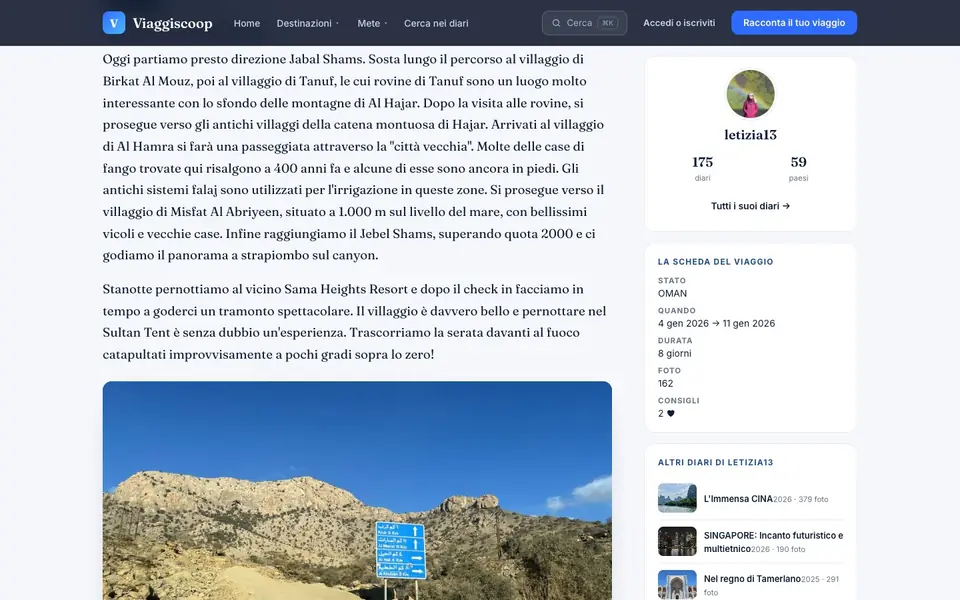
Scroll: the diary moves forward, and back again if you scroll up. It is the real portal page, recorded while it is being read.
Portals that carry thousands of people a day.
This is the work we do: portals with thousands of people a day inside them, databases sized to answer quickly even when everybody arrives at the same moment, accounts managed and content growing every day. With facts, not with words: these numbers are the portal's, not a slide deck's.
Thousands of people, every day
viaggiscoop.it is not a shop-window site to look at: it is a portal serving thousands of people a day, and it keeps answering while we work on it. It is the kind of system we are used to being inside — and the reason it does not frighten us.
Databases sized, not improvised
10,180 diaries and 130,066 photographs on SQL Server, ordered by continent, country, year and author: large tables, queries measured one by one, system memory tuned so the pages stay fast under load. You size on numbers, not on feelings.
Accounts, peaks and continuity
Registration, personal area, editorial desk, English portal and rankings that update themselves: accounts managed, load spread and no maintenance window in which to switch everything off. Things that hold up show it when people arrive, not when the site is empty.
NASA data, algorithms and a quiz: the part you do not see.
The portal is not only a place where stories are read: underneath there is a machine working on data. This is the part the reader never sees, and the part we are technically proudest of.
Weather from NASA data
For the places written about, the portal shows the weather — and the forecast does not come from just any service: it is wired to NASA APIs, queried for the geographical point of the diary. The traveller writes where they went; the system knows what the weather was like there.
Algorithms for how people live
From the data collected come the algorithms that describe what living in a country is like: not only where you go and what you see, but what kind of place it is — climate, seasons, conditions. They are calculations built on the archive of stories and on external sources, and they run inside the portal's own pages.
The engagement quiz system
The most direct way to bring a reader back is to let them play: an engagement quiz system with 5,000 questions built on more than 246 countries, with scores and rankings. It is engagement, but it is also another way to move the archive's content around.
A twenty-year-old system, kept up to date, carrying today’s traffic.
The portal is twenty years old, but it is not standing still: the code has been rewritten and brought forward over time to .NET Framework 4.8, to keep pace. Underneath there is a real platform — IIS, ASP.NET, SQL Server — with an archive of more than a hundred and thirty thousand photographs and the traffic of thousands of visits a day. Every change has to be made on the live site: pages compile on every request, the database serves the whole archive, and there is no maintenance window in which to switch the portal off: the work happens with the site on.
No downtime
Updates are published with the portal open, one piece at a time, checking every time that pages answer and the database holds.
The weight of the archive
Twenty years of content means enormous tables: the work on queries and on the system's memory is done to keep the pages fast, without touching a line of the stories.
The new on the upgraded engine
Personal area, editorial desk, English portal: the new parts live alongside the same system, upgraded and brought forward over time, without sending readers to a different site.
You publish a diary by talking to an assistant.
This is the part we are happiest with. A diary arrives by email, often written in one go, sometimes with no photographs. Before, you opened fields and copied and pasted; now the editorial team talks to an assistant: the AI helps to put the days in order, to fix titles and text, while the photographs are sorted, the cover image is chosen and the captions are written. At the end the draft is saved, read over and published.
AI inside the workflow, not beside it
The assistant is not a chatbot parked on the side: it sits inside the tool that turns a diary into a page, and it works on the real content — text, days, photographs, captions.
Twenty years of publishing
The editorial team has published thousands of diaries and keeps going: the tool is made for someone using it every day, not for a demo.
The same portal, in English.
Tripscoop.net was built with the same design as viaggiscoop.it and with the content translated: the stories, the photo captions, the country pages, the rankings and the menu items. Its URLs follow the same structure as the Italian portal, so the two sites really do resemble each other and can grow together. Visitors to the English portal find the same archive, in their own language.
The work of the team, the trust of the client.
The work of the team
New design, English portal, editorial chat, personal area, rankings: teamwork made of continuous measurement and of publishing with the site switched on, never an interruption for someone reading a story.
Thank you, Viaggiscoop
Thank you for your trust and for opening the heart of the portal to us: the database, the diaries, the photographs, twenty years of stories. It is the only way to work on a system like this without breaking anything — and to bring AI in where it really helps.
A twenty-year-old portal is not rebuilt with a restyling: it is rebuilt from inside the system, one piece at a time, without ever switching it off. Everything we know how to do is in here — weather from NASA APIs, algorithms on how people live, a quiz with 5,000 questions, AI in the editorial desk — put to work for an archive nobody wants to lose.Fabio Visentin · Web'nGO Italia
Images from the project.

Do you have a portal that has to grow without stopping?
Tell us what it is like: how big it is, how long it has been running and what it should do more of. We will tell you what can change with the site switched on.
Let’s talk about it